RETINA ARTIFACTS
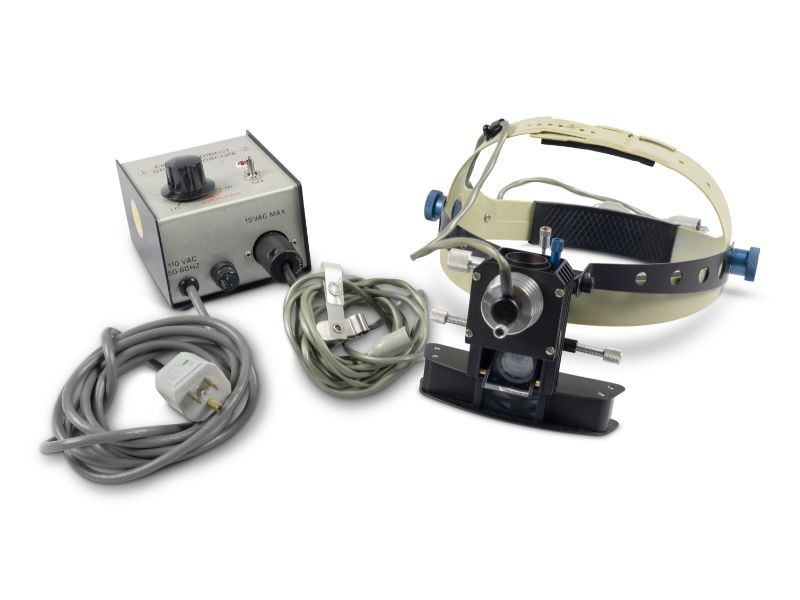
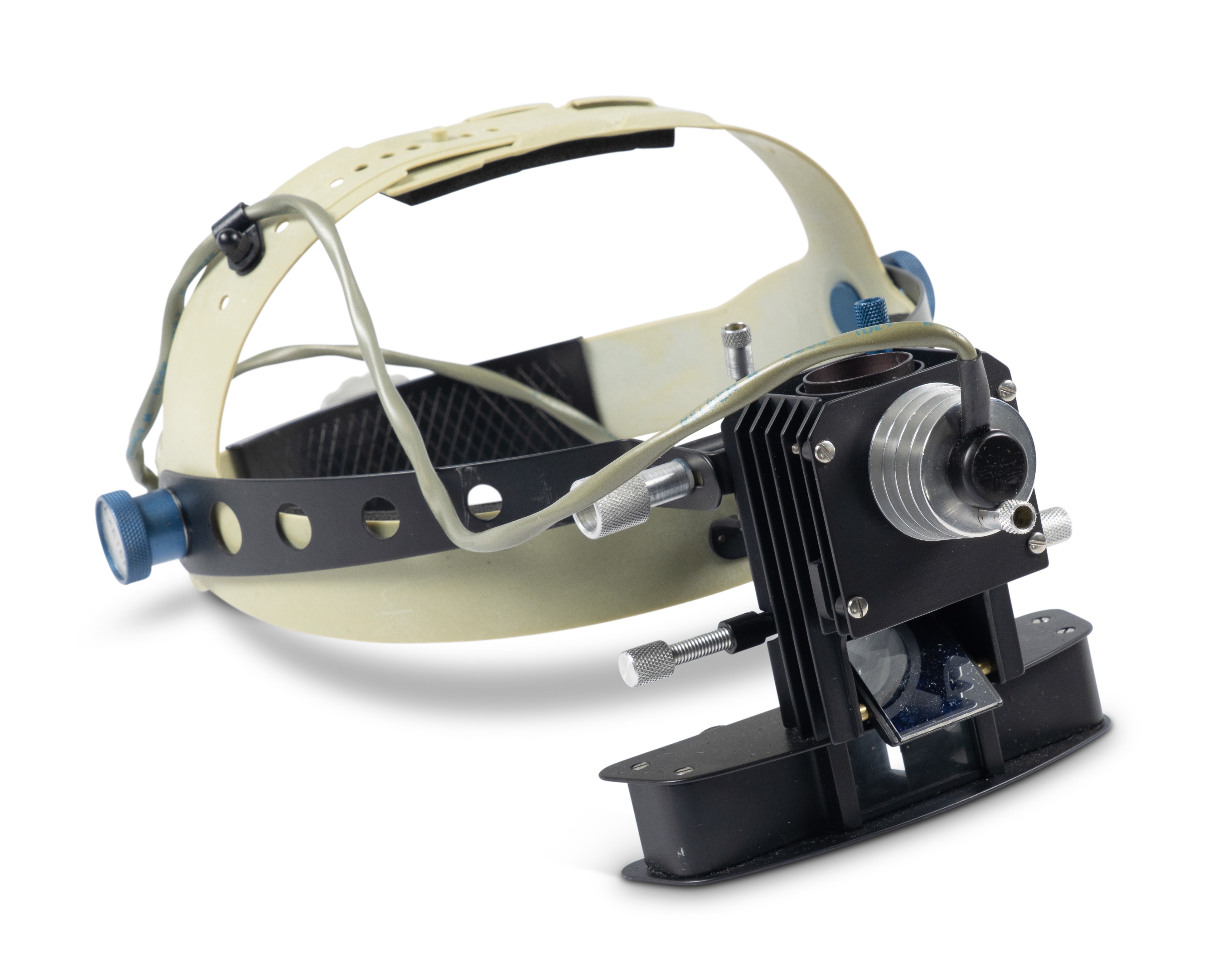
Exeter Indirect Ophthalmoscope
In 1851, Hermann von Helmholtz revolutionized the field of ophthalmology by publishing “Description of an ophthalmoscope for examining the retina in the living eye.” His publication described the means of properly illuminating and refracting light to best focus the retinal structures using a candle and microscope glass plates.
The binocular ophthalmoscope was invented in 1861 by Felix Giraud-Teulon, from France. It used a solid rhomboid prism to divide the image and had a fixed interpupillary distance. They were handheld and used an oil or gas lamp as a light source.
In 1945, Charles L. Schepens, MD, developed the first head-mounted binocular indirect ophthalmoscope.
(Published August 2026)
Item generously donated by the Kirk H. Packo, MD, FACS, FASRS family.