
Contributed by Brittany Hodges, MD
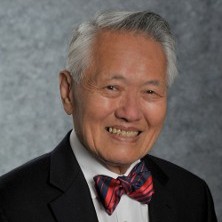
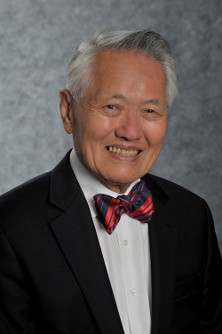
Wayne Fung, MD, was born in Oakland, California, in 1934 and moved to Vallejo as a young child. His interest in medicine began early in life, shaped in part by frequent visits to the physician’s office for asthma exacerbations and the steadfast encouragement of his mother.1 These early experiences sparked a lifelong commitment to healing and clinical excellence.
After completing his undergraduate medical prerequisite coursework at the University of California, Berkeley, Dr. Fung earned his medical degree from the University of Southern California in 1959. He subsequently served his country as a flight surgeon in the United States Air Force for two years.2 It was during this formative period that he developed a deep fascination with the anatomy and physiology of the human eye and made the pivotal decision to pursue ophthalmology.1
Dr. Fung completed his ophthalmology residency at Presbyterian Medical Center in San Francisco. He then pursued advanced fellowship training as a Heed Fellow at Washington University and vitreoretinal surgery at the Bascom Palmer Eye Institute, where he refined the surgical skills that would later define his career.3
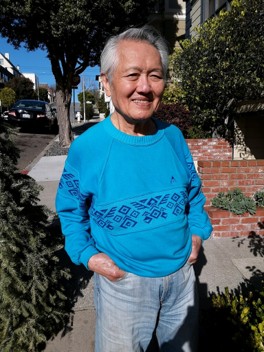
Over the course of a distinguished five-decade career, Dr. Fung emerged as a pioneering retinal specialist, prolific researcher, and deeply respected educator. He was among the first surgeons to perform pars plana vitrectomy west of the Mississippi River, helping to usher in a new era of modern retinal surgery in the early 1970s.4 His scholarly contributions included numerous peer-reviewed publications addressing innovative treatments such as the use of intravitreal air for giant retinal tears and early therapeutic approaches for neovascular age-related macular degeneration. In parallel with his clinical and research work, he was a devoted teacher, training residents and fellows at California Pacific Medical Center.3
Dr. Fung’s impact extended well beyond the United States. He served for eight years as the personal ophthalmologist to the President of Taiwan and participated in multiple international medical missions with Project Orbis, providing ophthalmic care and education in Ethiopia, Cuba, and Bangladesh.3
Dr. Fung passed away peacefully on July 23, 2025.2 His legacy endures through his groundbreaking surgical innovations, scholarly contributions, global service, and the generations of ophthalmologists he mentored. His trailblazing spirit and dedication to patient care continue to shape the field of vitreoretinal surgery today.