
Contributed by Brittany Hodges, MD, and Pradeepa Yoganathan, MD, MSc, FRCSC, FASRS
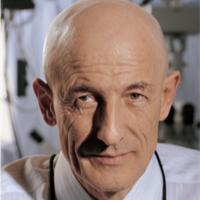
Jean-Marie Parel, Ing, ETS-G, PhD, FARVO, was born in Switzerland in 1943, during the midst of World War II. As a child, he was stricken with polio, a condition that limited his physical activity but profoundly shaped his intellectual development. Recognizing her son’s boundless curiosity, his mother devoted herself to educating him at home, teaching him to read, write, and speak French. These early lessons cultivated a deep love of learning. Even at a young age, Jean-Marie was captivated by illustrations in medical dictionaries and became determined to pursue a career in medicine.1
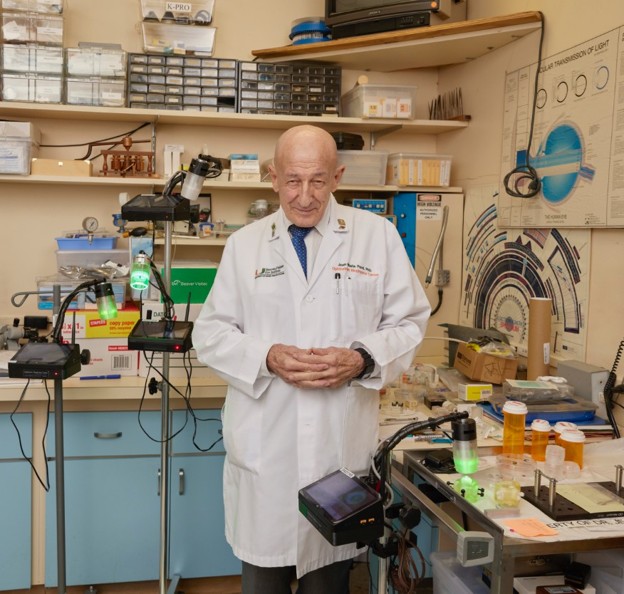
He went on to earn degrees in physics, applied mathematics, and electronic engineering. Despite his academic achievements, Jean-Marie was denied admission to medical school at the University of Geneva after an interview committee concluded that he could not afford the cost of attendance.2 Rather than deterring him, this setback redirected his path. What followed was an extraordinary career that would establish Jean-Marie Parel as one of the foremost innovators in biomedical engineering for ophthalmic surgery, defined by creativity, perseverance, and an unwavering commitment to advancing the field.
Dr. Parel earned a master’s degree in biophysics from Bern University, where he studied under Dr. Franz Fankhauser, an ophthalmologist who introduced him to ophthalmic optics. This exposure proved transformative. Jean-Marie quickly fell in love with ophthalmology,1 setting the stage for a prolific and influential career that would span more than six decades.
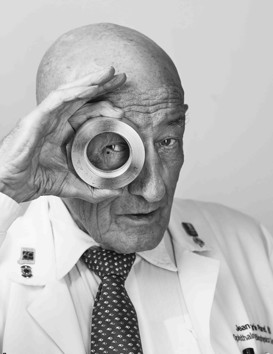
In 1969, he was recruited by Dr. Edward Norton, founding Chair of Bascom Palmer Eye Institute, to serve as director of the Ophthalmic Biophysics Center (OBC). Under Dr. Parel’s leadership, the OBC became a pioneering hub for translational research and innovation in ophthalmology. Over the course of his career, he invented or significantly improved more than 350 medical instruments, fundamentally reshaping the practice of ophthalmic surgery.3
Among his most consequential contributions was the development of the vitreous infusion suction cutter (VISC) in 1969, created in collaboration with Dr. Robert Machemer and Dr. Helmut Buettner.4 This innovation became the foundation of modern pars plana vitrectomy and remains a cornerstone of contemporary retina surgery. His other notable achievements include solenoid-operated membrane peelers and vertical scissors, advanced fluid control systems developed with Dr. John Clarkson, the Fantes ordinal grading scale for corneal haze assessment, controlled-release delivery of 5-fluorouracil, laser phacoemulsification and laser thermokeratoplasty, glaucoma micro-shunts, retinal tacks for surgical reattachment, and silicone oil–based ocular drug delivery systems.3
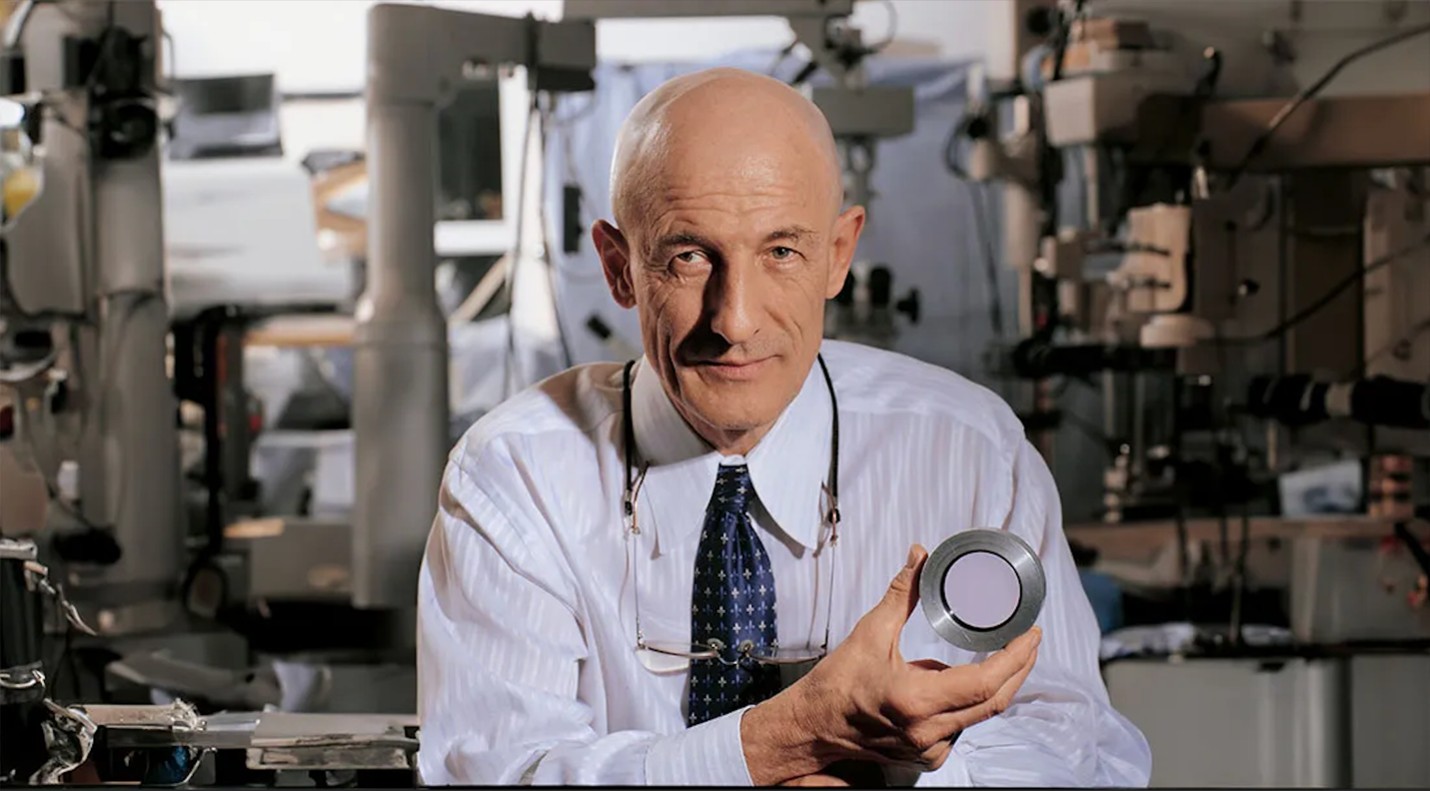
In recognition of his extraordinary contributions, Dr. Parel received numerous international honors, including the Gold Medal from the International Congress of Ophthalmology, the Prince Philip Prize for Australian Scientific Design, the Relja Award from the European Vitreoretinal Society, and induction into the Iron Arrow Honor Society, the highest honor bestowed by the University of Miami.1
Jean-Marie Parel passed away on August 10, 2025. He is survived by his wife and son. His legacy is indelibly woven into the fabric of modern ophthalmology. Through his inventive brilliance, collaborative spirit, and visionary approach to medical engineering, he transformed surgical care and improved the lives of countless patients. His influence will continue to inspire generations of clinicians, scientists, and innovators for decades to come.